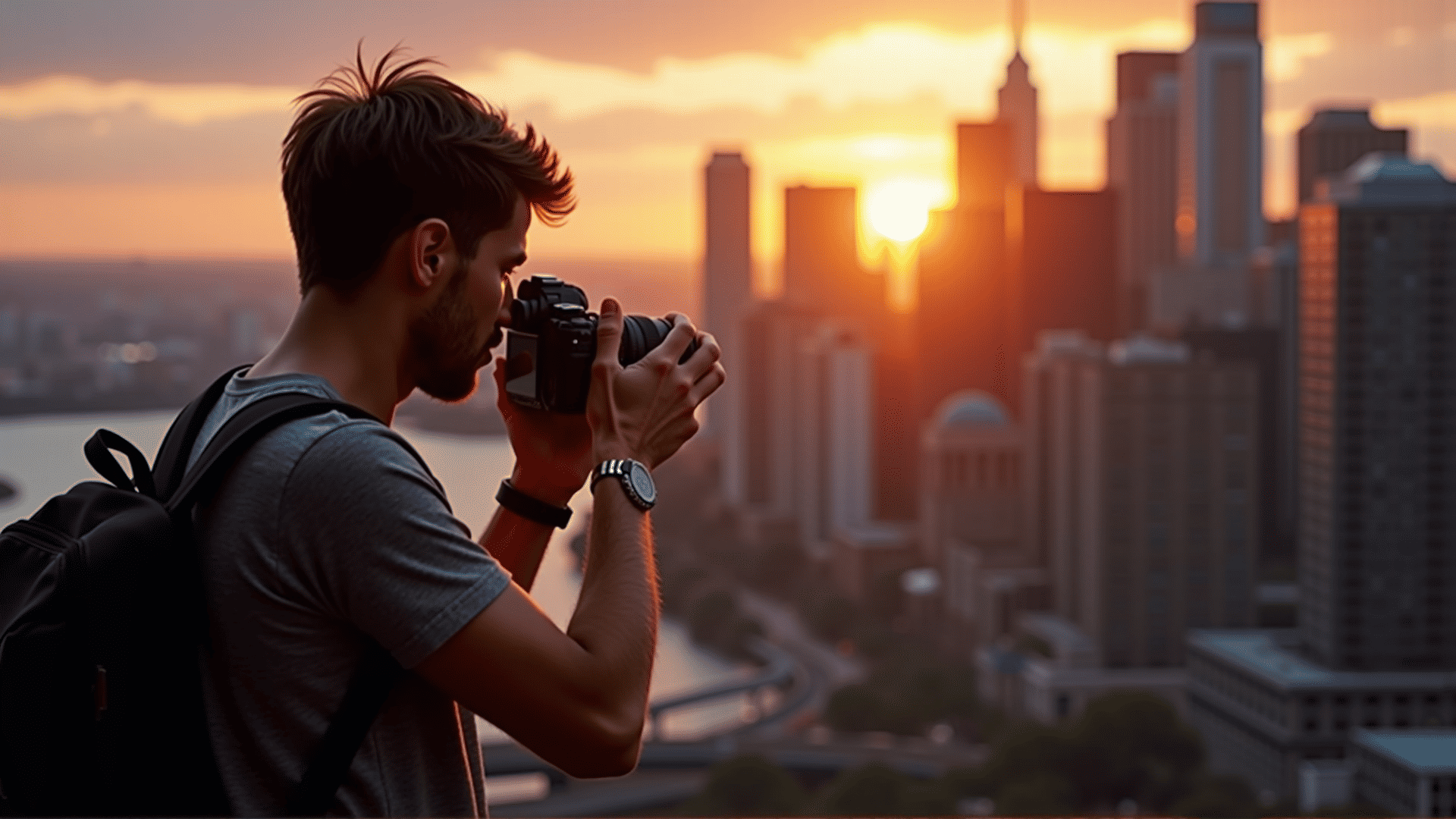
Understanding how to effectively use camera settings is crucial for anyone looking to improve their photography skills. Adjusting aperture, shutter speed, and ISO allows photographers to manipulate light and capture stunning images. Here's a closer look at these essential components that can transform your photography experience.
Aperture
Aperture refers to the opening in a lens through which light enters the camera. It is typically expressed in f-numbers (e.g., f/2.8, f/5.6), known as f-stops. A lower f-stop like f/2.8 allows more light to enter, making it ideal for low-light situations and achieving a shallow depth of field. This effect creates beautifully blurred backgrounds, making it perfect for portrait photography. Conversely, a higher f-stop such as f/16 reduces the amount of light, which is useful for landscape photography where a larger depth of field is required to keep more of the scene in focus.
Shutter Speed
Shutter speed determines how long the camera's shutter remains open to allow light to hit the sensor. It is expressed in fractions of a second (e.g., 1/60, 1/250) or in full seconds for longer exposures. A fast shutter speed, like 1/1000, can freeze motion, making it ideal for action shots. On the other hand, a slow shutter speed, such as 1/30 or longer, can introduce motion blur, adding a sense of movement to photographs or creating smooth, flowing effects in water or nighttime photography.
ISO
ISO measures the sensitivity of your camera's sensor to light. A lower ISO value, such as 100 or 200, is best for bright conditions and results in images with less grain (noise). Higher ISOs, like 1600 or 3200, increase the sensor's sensitivity, which is beneficial in low-light environments. However, this comes at the risk of introducing more noise into the image. Balancing ISO with aperture and shutter speed is crucial to maintaining image clarity and quality.
Balancing the Three Settings
Mastering photography involves finding the right balance between aperture, shutter speed, and ISO to suit the lighting conditions and the artistic intent. This balance is often referred to as the "exposure triangle." For instance, in a dimly lit setting, you might choose a wider aperture and a slower shutter speed, adjusting the ISO upwards if necessary, to capture the scene without introducing excessive noise.
Practice and Experimentation
The best way to gain proficiency in these settings is through practice and experimentation. Try shooting the same scene with multiple settings to observe the effects each adjustment has. Discover how different combinations influence the final image and help cultivate your personal style.
By understanding and manipulating aperture, shutter speed, and ISO, photographers can unlock a world of creative possibilities. Whether you are capturing dynamic sports moments, serene landscapes, or intimate portraits, these settings allow you to fully harness your camera’s potential and bring your artistic vision to life.